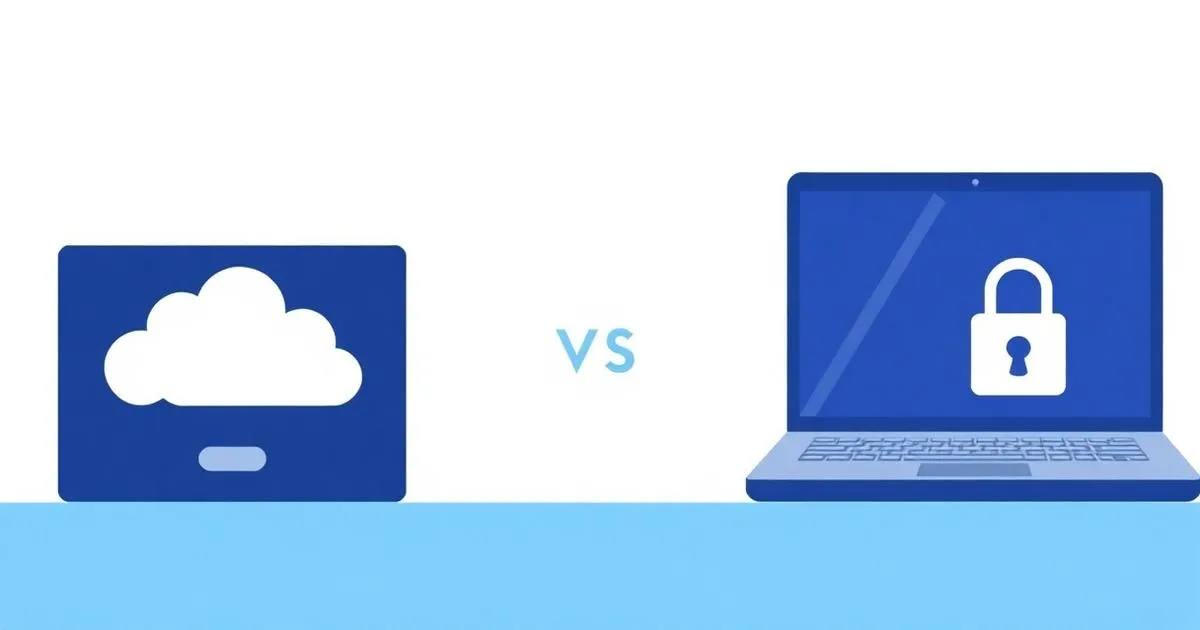
A Question Worth Revisiting
For the past decade, the argument for self-hosting anything has been getting quieter. Cloud got cheaper, cloud got more reliable, cloud got easier. “Just use the SaaS” became the default answer in almost every category, and messaging automation went the same way — consolidating around a handful of cloud iMessage APIs running Mac Mini farms in datacenters.
For most categories, that’s still the right answer. But there’s a narrower question worth revisiting: for data that’s sensitive, hard to replace, and legally exposed — your commercial contact list, your conversation history, the customer relationships your business actually runs on — has the cloud default been stress-tested against what has been happening lately? Three overlapping waves of news in the past few months suggest the answer deserves a second look. This post is the field notes.
Wave One: The SaaS Breach Year
Security researchers predicted before the year started that 2026 would be “the year of SaaS breaches,” and the first few months haven’t pushed back on the prediction. Odido had 6.2 million customer records stolen from its CRM. Cisco was caught up in a Salesforce breach blamed on a group called ShinyHunters, with three million customer records at risk. Google was hit in the same campaign. Salesforce itself has been warning customers all spring about an active extortion campaign targeting their instances.
What’s striking about these attacks isn’t how technical they were. It’s how simple. Most of them ran on stolen login tokens, employees who got tricked into approving the wrong thing, and forgotten guest accounts with too much access. No zero-days, no clever exploits. Researchers summed it up: over half of recent breaches came down to basic misconfigurations, and about 85% involved accounts that had more permissions than anyone meant to give them. None of the companies involved were sloppy. They were just working in a world where there are now more ways to break into a normal SaaS account than there are ways to defend one.
Now map that onto the cloud iMessage model — and here’s where it’s worth correcting a common misunderstanding. Commercial providers like Sendblue and Linq don’t ask you to hand over your Apple ID. They use theirs. You rent a new, dedicated phone number from them, and their Mac Mini farm sends and receives under their own Apple IDs. That’s honestly a feature: your personal Apple ID and your personal contacts never touch their infrastructure, so a cloud-side breach cannot leak your personal message history or your family thread.
What does touch their infrastructure is everything the commercial messaging layer actually needs to function:
- Your full contact list, uploaded to their platform so their routing system can address messages.
- Every outbound message you queue, with its text and its destination number.
- Every inbound reply from your customers, flowing through their cloud before reaching your dashboard.
- Conversation history, delivery metadata, and timestamps, stored for operational and retention reasons.
- Administrative access for their employees — by necessity — to the system that holds all of the above.
Every one of those is exactly the surface the 2026 breach wave is hitting. A cloud messaging provider operating perfectly responsibly today is still one social-engineered employee away from the Cisco story. And the data being exfiltrated — customer contact lists, conversation history, commercial outreach content — is exactly the high-leverage material the 2026 attackers have been specifically going after.
Wave Two: The CLOUD Act Gets Teeth
If you’re operating in Canada, or serving Canadian customers from anywhere, the second wave is the one that matters most — and it’s the wave US-based competitor blogs will not be writing about.
The CLOUD Act is a 2018 US law. It lets US authorities force any US-based cloud provider to hand over data they control — no matter where that data physically lives. What matters is the country the company is based in, not the country the server is in. A US company running a datacenter in Toronto is still subject to US subpoenas.
For years this was a theoretical concern. That has been changing. In March 2026, Alberta’s Office of the Information and Privacy Commissioner released a new privacy-assessment form that public bodies now have to fill out before deploying any SaaS tool that handles personal data — and one of the questions it asks directly is whether the vendor is exposed to the CLOUD Act. Quebec already requires a similar review before any personal information leaves the province. Canada’s sovereign cloud initiative, together with Alberta’s program that outright blocks vendors subject to the CLOUD Act, both exist as a direct response to how far US law can now reach. At the federal level, Canada is moving toward a new privacy law with real penalties and real enforcement.
The practical version: if your messaging provider is a US-headquartered company, your commercial contact list and your conversation history are legally accessible to US authorities through a process you have no visibility into. Your Canadian clients did not opt into that. A year ago, “have you evaluated CLOUD Act exposure on your SaaS stack?” was answered with “we didn’t consider it.” A year from now, that answer is not going to be good enough.
Wave Three: The AI Training Surprise
The third wave is still unfolding. In early 2026, a social media post with over six million views revealed that Gmail users had been silently opted in to letting Google train on private messages and attachments. Perplexity was hit with a class action alleging its app transmitted users’ private conversations to Meta and Google even with Incognito mode enabled. Figma was sued over training generative AI on customer design files after years of public assurances that it wouldn’t.
None of those were breaches. They were policy changes — data the user handed over for one reason got quietly redirected to another, sometimes in direct contradiction of what the company had promised. This changes how you have to think about trust in cloud SaaS. It’s not enough to ask “can this vendor be hacked?” You also have to ask “what happens if this vendor decides next quarter that customer data is a training asset?” For messaging services, that question is especially sharp. Customer contact lists, message threads, conversation history — that’s exactly the kind of data that would be valuable for training AI models that understand relationships. And nothing in how a cloud messaging service is built would stop a vendor from making that decision next year.
What Self-Hosted Actually Means
Against all three waves, here is what running messaging automation on a Mac you own actually changes.
Your Apple ID lives in your own Keychain, on your own hardware. Your contacts, your sequences, your message log, and your templates all sit in local files on your Mac. When the scheduler sends a message, it writes it to a local file the Messages app reads; when a reply arrives, the Messages app writes to a local file BlueDrip watches. Nothing in that round-trip involves a remote server.
The network traffic leaving your Mac is limited to three things:
- The actual messages — iMessage or SMS — going out from the same Apple ID you already use, through the same Apple infrastructure every iPhone uses. Recipients without iMessage automatically get SMS from your real number instead; same send, same sequence, just a different bubble color on the other end.
- A license check once a day. It carries only a machine fingerprint and a license key — no contact data, no message content, no conversation history.
- LLM API calls you explicitly opt into — for example, if you’re using generative templates to write unique messages per recipient. Those calls go directly from your Mac to whichever provider you picked (OpenAI, Anthropic, OpenRouter). The messaging vendor is not in that path.
That’s the full network perimeter. Your contact list never leaves the building. Your conversation history never leaves the building. If a social-engineered employee at the messaging vendor got tricked into approving a bulk export, there would be nothing to export — there is no cloud-side copy of your data. If a US court served the vendor a CLOUD Act request for your Canadian clients’ contact information, there would be nothing to hand over. If the vendor decided in 2027 to quietly update its privacy policy to train AI on customer messages, there would be nothing in their infrastructure to train on.
None of that is a philosophical argument. It’s a practical one. Three specific kinds of risk — getting hacked, getting subpoenaed, getting quietly opted into something new — each one removed, not because the vendor promised something, but because the data the vendor would need is on your machine, not theirs.
What You Give Up
This isn’t a free win. The honest tradeoffs:
- You need a Mac that’s reachable when sequences run. Not on 24/7, but if it’s asleep for four days, so are your sequences. Mac mini under a desk is the usual answer; closed laptop in a drawer is the usual mistake.
- You’re responsible for backups. The contact list that’s protected from cloud breaches is not automatically replicated to a datacenter. Time Machine is not optional.
- You’re the sending reputation. If you mess up your volume or your list, the Apple ID that pays is yours — not a pool of customers sharing the hit. Flip side of the argument in the companion post on iMessage blocks; it cuts both ways.
- You can’t drive it from a web app as an API. Self-hosted messaging is a desktop application you run from a dashboard, not a service your backend calls into. If what you need is “programmatic SMS from a cloud web app,” the answer is Twilio.
For most North American service businesses running outreach, none of those are dealbreakers. For a Canadian operator in 2026, the CLOUD Act side of the argument increasingly pushes the option from preferred to required.
When Cloud Still Wins
Narrower, honest cases for picking a cloud messaging service:
- You don’t own and can’t dedicate a Mac.
- You need programmatic messaging from inside an existing web application, and the cleanest path is a REST API your backend calls.
- You’re running commercial-scale volume that should really be A2P SMS anyway, and iMessage is not the right tool regardless (see the channel math post).
- You specifically need a dedicated phone number that is not your real one.
Those cases are real, and the cloud services exist for good reason. But they’re narrower than they were a year ago, and they’ll keep narrowing as the 2026 regulatory and breach environment keeps compounding.
The 2026 Read
Every year for the last decade, “just use the SaaS” has been getting harder to argue with, and for most categories it still is. But 2026 has drawn a sharper line around one of them: any data valuable enough that its leak would actually hurt you — and a customer contact list with conversation history is exactly that kind of data.
The breach wave showed that even competent vendors are one social-engineered employee away from a bad week. The CLOUD Act wave showed that physically-local data can still be legally remote. The AI training wave showed that even untouched data can be retroactively redefined as training material by a policy change you never got asked about.
Self-hosted messaging isn’t a philosophy. In 2026 it’s a specific answer to three specific classes of risk that all got worse at the same time. Your commercial contact list, your conversation history, and the Apple ID you send from all live on a Mac you own and physically control. No cloud-side copy for an attacker to exfiltrate. No vendor with access to a foreign subpoena. No policy change that can retroactively turn your messages into training data.
In the market we’re operating in this year, that’s not a preference. It’s the sane default.